Source PU Leather Pocket Planner for Gift, Promotion, School
Compare 30 PU leather pocket planner options from verified Chinese suppliers. Buyers can review customization, binding types, and pricing for gifts, promotions, and school use.
Key considerations
Products List




Comprehensive Sourcing Guide
Strategic Sourcing Guide for PU Leather Pocket Planners
Understanding Product Variants and Core Specifications
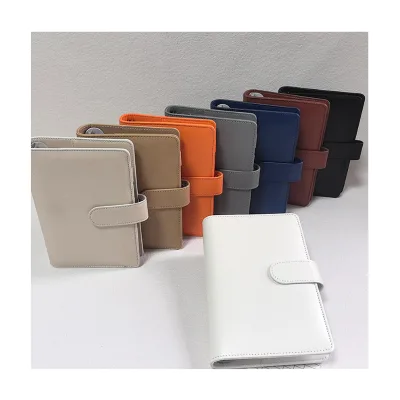
The market for PU leather pocket planners presents a diverse landscape where "pocket planner" serves as a functional category descriptor rather than a single standardized SKU. Buyers must first recognize that the core keyword encompasses distinct product architectures, ranging from diary-style organizers to ring-bound file boxes. The primary material constraint for this specific search is the use of PU (Polyurethane) for the cover, which offers a balance between the aesthetic appeal of genuine leather and the durability required for business and promotional use. However, the internal construction varies significantly across listings. Some units utilize perfect binding, a method where pages are glued together at the spine, creating a sleek, professional look suitable for daily note-taking. In contrast, other variants employ loose-leaf or ring binder mechanisms, which prioritize flexibility and the ability to reorganize content.
The physical dimensions of these planners are a critical differentiator. Observed specifications indicate standard sizes such as 14.2 x 20.8 cm and 21.6 x 14.2 cm, which align with common A5 or pocket-sized formats. While some products adhere to these standard dimensions, the market also supports fully customized sizing, allowing buyers to tailor the product to specific branding needs or ergonomic requirements. The inner pages are typically constructed from offset paper, with sheet counts ranging between 80 and 120 sheets. This page density is generally sufficient for standard daily planning but may vary based on the specific model, such as the AM-165 or H-003, which may have distinct internal layouts.
A significant point of variation lies in the locking mechanism. The product pool includes both "With Lock" and "Without Lock" configurations. The inclusion of a lock suggests a focus on privacy and security for the user, making these models particularly suitable for executive gifts or high-security promotional items. Conversely, the "Without Lock" variants prioritize ease of access and speed of use. Additionally, the presence of features like zippers or clips further segments the market. Some listings indicate a "Without Clip" feature, while others may include different fastening mechanisms. Buyers must verify these specific attributes against their functional requirements, as a planner intended for quick reference in a meeting differs fundamentally from one designed for secure storage of sensitive data.
Technical Attributes and Customization Capabilities
Customization is a central pillar of the PU leather pocket planner market, driven largely by the demand for corporate branding and promotional utility. The majority of suppliers in this sector explicitly welcome OEM (Original Equipment Manufacturer) and ODM (Original Design Manufacturer) services. This allows buyers to imprint custom logos, often utilizing CMYK (Cyan, Magenta, Yellow, Key/Black) printing processes on the cover to ensure vibrant, full-color brand representation. The customization extends beyond the exterior; inner materials can often be specified as offset paper or other customized substrates, and the overall model can be tailored to specific dimensions, such as the 14.2 x 20.8 cm standard or fully bespoke measurements.
The printing capabilities on the cover are generally standardized to CMYK, which supports high-fidelity color reproduction. However, the specific printing style, such as "Printed" versus "Plain," can vary by model. Some units feature horizontal lines on the inside pages, a common design choice for structured note-taking, while others may offer blank or grid layouts depending on the customization order. The binding method is another area where customization plays a vital role. While perfect binding is common for a seamless look, loose-leaf and glue-bound options provide alternative structural solutions. The "Style" attribute often defaults to "Printed," but the underlying structure—whether it is a diary, an organizer, or a file box—determines the internal utility.
When evaluating the technical specifications, buyers should note the specific model numbers associated with different configurations. For instance, models like H-003, Q1, and z1 may represent distinct product lines with unique feature sets. The H-003, for example, is associated with a specific packing standard of 3 pieces per shrink wrap and 60 pieces per carton, whereas other models might utilize simple OPP bags. The production model designation, whether listed as "OEM/ODM" or "Customized," indicates the flexibility of the manufacturing process. It is essential to understand that while the core material (PU) remains constant, the internal mechanics, page count, and finishing details are highly variable. This variability requires precise communication during the sourcing phase to ensure the final product matches the intended application, whether for school use, general promotion, or specific gift-giving scenarios.
Cost Drivers and Pricing Dynamics
The pricing structure for PU leather pocket planners is influenced by a complex interplay of material costs, customization levels, and order volume. The observed price range in the market spans from $0.30 to $17.40 USD, a wide disparity that reflects the difference between basic, unbranded units and premium, highly customized executive organizers. The lower end of this spectrum typically corresponds to standard models with minimal customization, such as basic PU covers with standard offset paper interiors and no locking mechanisms. These units often have lower Minimum Order Quantities (MOQs), starting as low as 10 units, which allows for small-scale testing or immediate promotional needs.
Conversely, the upper end of the price range is driven by several key factors. First, the inclusion of advanced features such as locks, zippers, or specific binding types like ring binders adds to the manufacturing complexity and material cost. Second, the extent of customization significantly impacts the unit price. Full-color CMYK printing, custom logo placement, and bespoke dimensions require additional setup time and specialized tooling, which are often amortized over the order quantity. Third, the choice of inner material and page count plays a role; while 80-120 sheets is standard, requests for higher-quality paper or increased page density will increase the cost.
MOQs in this sector typically range from 10 to 1,000 units. Lower MOQs are advantageous for buyers testing new designs or fulfilling small promotional campaigns, but they often come with a higher per-unit cost due to the fixed costs of setup and production runs. As order volumes increase, the per-unit cost generally decreases, reflecting economies of scale. However, buyers must be cautious of the trade-off between cost and flexibility. High-volume orders may lock in a specific design, making it difficult to adapt to changing market needs without incurring additional costs. Additionally, the production time, which can vary from 3 days for simple items to 15-20 days for customized orders, affects the overall cost structure. Rush orders or expedited shipping may incur additional fees, further influencing the total landed cost.
Compliance, Standards, and Geographic Origins
When sourcing PU leather pocket planners, understanding the geographic origins and associated standards is crucial for ensuring quality and regulatory compliance. The primary manufacturing hubs identified in the market include Hefei, China, Guangzhou, and Jinan, China. Each of these locations may have different industrial clusters and supply chain efficiencies that impact the final product. Hefei, for instance, is noted for producing planners with specific standard dimensions like 14.2 x 20.8 cm, while Guangzhou is associated with models like H-003 that may have different packing and material specifications.
While specific certification details are not universally listed for every product, buyers should verify that the PU material used complies with relevant environmental and safety standards, particularly if the products are intended for export to regions with strict regulations on chemical content. The "Global" export attribute suggests that these products are designed to meet international shipping and trade requirements, but buyers must confirm that the specific supplier adheres to the standards of the destination market. This includes checking for compliance with REACH (Registration, Evaluation, Authorization, and Restriction of Chemicals) in Europe or similar regulations in North America and Asia.
The production standards, such as the 14.2 x 20.8 cm or 21.6 x 14.2 cm dimensions, serve as a baseline for quality control. Deviations from these standards should be clearly defined in the purchase agreement. Additionally, the packing standards, such as shrink bag and out carton or OPP bag configurations, are critical for ensuring the products arrive in pristine condition. The "Without Clip" or "With Lock" features must be verified against the product description to ensure they match the intended use case. Buyers should also be aware that while some products may claim "Customized" standards, the actual implementation must be validated through pre-production samples.
Supplier Evaluation and Quality Control Protocols
Evaluating suppliers for PU leather pocket planners requires a multi-faceted approach that goes beyond price and lead time. The first step is to verify the supplier's capability to handle the specific customization requirements. Since the market supports OEM and ODM services, buyers should request evidence of past work, such as portfolios or case studies, that demonstrate the supplier's ability to execute complex designs, such as CMYK printing on PU covers or integrating locking mechanisms. The "Welcome" status for OEM/ODM indicates a willingness to collaborate, but the depth of this collaboration varies by supplier.
Quality control is paramount, especially given the variability in product attributes. Buyers should establish a clear quality assurance plan that includes pre-production sample approval, in-process inspections, and final random sampling. The "Inside Pages Printed: Horizontal Line" and "Cover Material: PU" attributes should be verified against the physical sample to ensure consistency. For products with specific dimensions, such as 14.2 x 20.8 cm, a tolerance range should be agreed upon to account for manufacturing variances. The "Production Time" of 3 days for some items versus 15-20 days for others highlights the need for realistic scheduling and buffer time for quality checks.
Suppliers should also be evaluated on their communication and responsiveness. The "Payment: Can Discuss" attribute suggests flexibility in financial terms, but buyers must clarify the payment schedule and terms to mitigate risk. Additionally, the "Export: Global" claim should be backed by the supplier's experience in handling international logistics and documentation. Buyers should request references from other clients, particularly those in similar industries or regions, to gauge the supplier's reliability. Finally, the "Feature: Without Clip" or "Zipper: Without Zipper" attributes should be explicitly confirmed in the quality control checklist to ensure the final product matches the design specifications.
Long-Term Procurement and Application Strategy
The long-term success of sourcing PU leather pocket planners depends on aligning the product with specific applications and building a sustainable supply chain. The "Usage" attributes, including "Gift," "Promotion," "School," "Pocket," and "File Box," indicate a wide range of potential applications. For promotional use, the focus should be on cost-effective, high-volume orders with strong branding. For gift purposes, the emphasis shifts to premium materials, locking mechanisms, and elegant packaging. In educational settings, durability and functionality, such as loose-leaf binding, may be more critical.
Buyers should consider the lifecycle of the product and its potential for repeat orders. If the initial order is successful, establishing a long-term relationship with the supplier can lead to better pricing, priority production scheduling, and consistent quality. The "Customized Logo" and "OEM" capabilities allow for brand evolution, enabling buyers to update designs or introduce new models without changing suppliers. However, it is essential to maintain clear documentation of all specifications, including material grades, binding types, and packing standards, to ensure consistency across different production runs.
Furthermore, buyers should monitor market trends and consumer preferences. The demand for eco-friendly materials or specific design features may shift over time, requiring suppliers to adapt their offerings. By maintaining open communication and regularly reviewing performance metrics, buyers can ensure that their procurement strategy remains agile and responsive to market changes. The "Global" export capability of the suppliers provides a safety net for scaling operations, but buyers must remain vigilant about supply chain disruptions and geopolitical factors that could impact lead times and costs. Ultimately, a strategic approach to sourcing PU leather pocket planners involves a balance of technical precision, supplier collaboration, and market awareness.
FAQs
What customization options are available for the cover?
Custom logos and printed styles are available for the cover using CMYK printing. Buyers can request specific designs, though the base material remains PU leather for durability and aesthetic appeal.
Which binding methods are offered for these planners?
The product line offers perfect binding, loose leaf, and glue bound options. The specific binding type depends on the model, such as the AM-165 or H-003, allowing for varied organizational needs.
Can I order a planner with a locking mechanism?
Yes, some models come with a lock while others are without a lock. This feature varies by product configuration, allowing buyers to select units based on their specific security requirements for the planner.
What are the standard dimensions for these pocket planners?
Standard sizes include 14.2 by 20.8 cm and 21.6 by 14.2 cm. Customized dimensions are also available to meet specific branding or ergonomic requirements for the buyer's target audience.
How long does production take for customized orders?
Production time ranges from 3 days for simple items to 15-20 days for customized orders. The exact lead time depends on the complexity of the customization and the specific supplier location.
What is the minimum order quantity for these items?
The minimum order quantity ranges from 10 to 1000 units depending on the supplier and product model. Lower MOQs are available for testing designs, while higher volumes often reduce the per-unit cost.
Are these planners suitable for promotional and gift use?
Yes, the usage categories explicitly include gift, promotion, school, and pocket applications. The customizable nature of the PU cover and logo printing makes them ideal for corporate branding and promotional campaigns.